

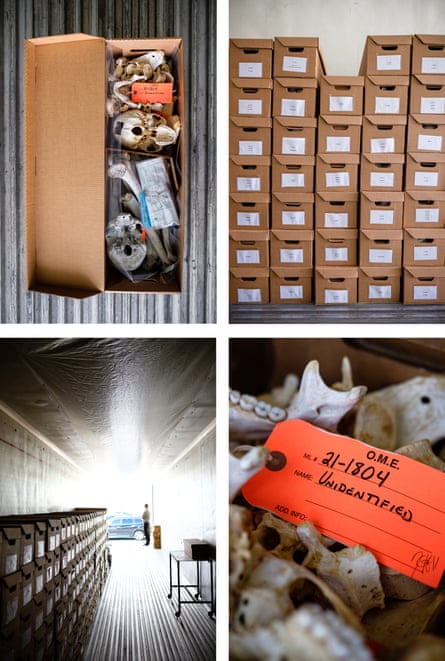
A shocking federal investigation exposed what prosecutors described as one of the most disturbing abuses of the body donation system ever uncovered in the United States. When agents from the Federal Bureau of Investigation raided the Arizona-based body donation company Biological Resource Center in 2014, they discovered scenes so grotesque that at least one veteran agent later reported suffering from post-traumatic stress disorder.
Inside the facility, investigators say they encountered a nightmarish operation that treated donated human bodies not with dignity or scientific purpose, but as raw inventory in a profit-driven black market.
Buckets of Human Heads and a “Frankenstein” Corpse
According to court documents and investigative reports, agents discovered nearly 1,800 human body parts stored inside the facility. The remains were not cataloged or respectfully preserved as families had been promised. Instead, they were allegedly dismembered, stacked, and stored in containers throughout the building.
Among the findings described in the investigation:
Buckets filled with severed heads, arms, and legs
A cooler containing male genitalia
Piles of mixed body parts stored without identification
A grotesque display in which a woman’s head had been sewn onto a man’s torso in what investigators described as a “Frankenstein-style” configuration
Federal investigators reported that the facility contained roughly 10 tons of frozen human remains, including hundreds of heads, legs, and spinal columns.
For seasoned federal agents accustomed to violent crime scenes, the conditions were so disturbing that one investigator later told reporters the experience left him psychologically scarred.
Families Say They Were Deceived
The scandal grew even darker when families of the deceased came forward.
Dozens of families said they donated the bodies of their loved ones to the Biological Resource Center because they believed the remains would be used for legitimate medical research and education.
Instead, according to lawsuits filed by more than 30 families, the company dismembered the bodies and sold the parts to third parties for profit, including organizations conducting military crash testing and other experiments not disclosed to donors.
The families alleged they were misled through false statements and deceptive practices, turning what they believed was a final act of generosity into a grotesque commercial enterprise.
A Legal System Critics Say Was Too Lenient
The owner of the operation, Stephen Gore, ultimately pleaded guilty in 2015 to operating an illegal enterprise related to the body donation business.
Yet critics argue the punishment did not match the gravity of the scandal. Gore received probation rather than prison time, a sentence that outraged many families whose relatives’ remains had been mutilated and sold.
Civil lawsuits later resulted in $58 million in damages awarded to victims’ families, but for many, the financial judgment did little to erase the trauma.
A Regulatory Failure
The case also exposed a largely unregulated industry.
Unlike organ donation, which is tightly controlled under federal law, the body donation and cadaver trade historically operated with minimal oversight in many states. Companies could accept donated bodies, dismember them, and distribute parts with relatively little monitoring.
The horror uncovered at the Biological Resource Center forced lawmakers to confront that gap. In response to the scandal, Arizona enacted new legislation in 2017 requiring state licensing and oversight for body donation businesses.
A Betrayal of Trust
For many observers, the case represents more than a regulatory failure. It is seen as a profound betrayal of trust.
Families who believed they were contributing to science instead learned that their loved ones’ bodies had been treated as commodities in what investigators described as a macabre marketplace.
What the FBI discovered inside the Biological Resource Center was not simply a crime scene. It was a chilling reminder of how easily compassion and generosity can be exploited when profit is allowed to operate without accountability.
And for the families still grappling with the truth, the question remains whether justice was ever fully served.


No comments:
Post a Comment