
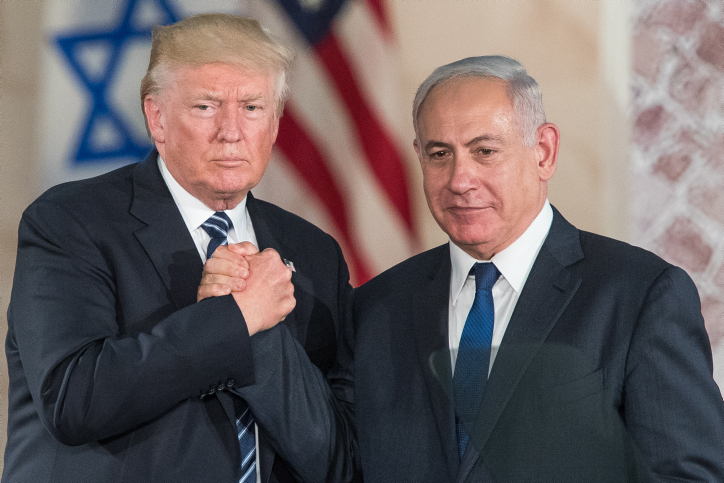
In international politics, power is not defined by speeches. It is defined by who 4thactually makes decisions when it matters. And in this war, that reality was laid bare the moment Benjamin Netanyahu made it clear: Israel—not the United States—will determine the timeline, the strategy, and the outcome.
That statement didn’t just clarify Israel’s position. It exposed Donald Trump.
For a president who has built his political identity on strength, dominance, and “America First,” the moment was nothing short of humiliating. Because when your closest ally openly declares that your influence does not dictate the course of a war you are deeply entangled in, what you’re left with is not leadership—it’s irrelevance.
Trump talks like a commander. Netanyahu speaks like one.
This is the uncomfortable truth: the United States is providing the muscle—resources, diplomatic cover, and global backing—but Israel is setting the direction. The IDF is calling the plays. And Trump, despite the bluster, is reacting rather than directing.
That’s not how superpowers are supposed to operate.
Historically, U.S. presidents have maintained at least the appearance of strategic control in joint conflicts. Even in complex alliances, Washington dictated the tempo, the red lines, and the exit ramps. But here, that structure appears inverted. Netanyahu’s declaration didn’t just assert independence—it signaled dominance.
And Trump didn’t push back.
No recalibration. No public assertion of American authority. No indication that the United States is anything more than a supporting actor in a conflict with massive global consequences. Instead, silence—or worse, alignment without leverage.
That’s where the perception of weakness takes hold.
Because leadership is not just about backing allies—it’s about setting boundaries. It’s about ensuring that American involvement comes with American control. When that disappears, so does credibility. Allies begin to question it. Adversaries begin to test it.
And right now, the message being broadcast to the world is clear: Israel is steering, and the United States is along for the ride.
That has consequences far beyond this war.
It reshapes how adversaries like Iran calculate risk. It signals to other allies that U.S. influence may be negotiable—or ignorable. And it undercuts the very premise of American global leadership, which relies not just on power, but on the perception that Washington ultimately decides when, where, and how that power is used.
Instead, we are watching a reversal.
Netanyahu is dictating timelines. The IDF is determining escalation. And Trump—despite occupying the most powerful office in the world—is left projecting strength while lacking control.
This isn’t about whether Israel has the right to defend itself. It does. This is about who is actually leading a war that carries enormous geopolitical consequences for the United States.
Right now, the answer appears to be: not the United States.
And that is the real story.
Because when a president allows an ally to openly define the terms of engagement without asserting American authority, it doesn’t project strength.
It projects dependency.
And in global politics, dependency is just another word for weakness.

No comments:
Post a Comment