Showing posts with label Netanyahu. Show all posts

Tuesday, March 24, 2026

The Illusion of Control: Netanyahu’s Declaration Exposes Who’s Really Driving This War


Image


In international politics, power is not defined by speeches. It is defined by who 4thactually makes decisions when it matters. And in this war, that reality was laid bare the moment Benjamin Netanyahu made it clear: Israel—not the United States—will determine the timeline, the strategy, and the outcome.

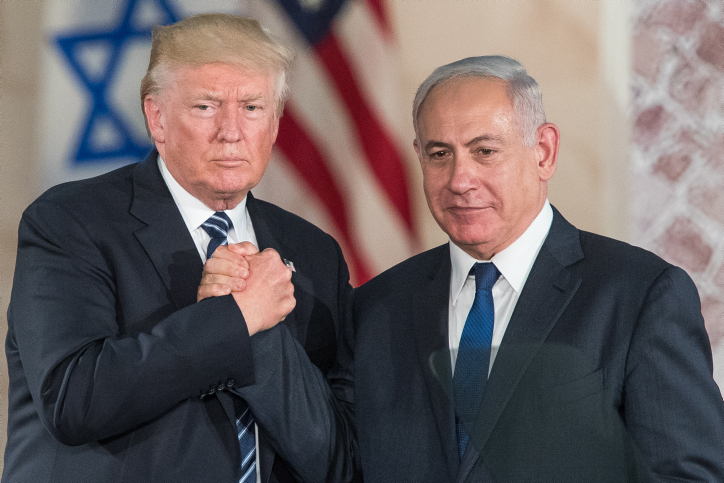
That statement didn’t just clarify Israel’s position. It exposed Donald Trump.

For a president who has built his political identity on strength, dominance, and “America First,” the moment was nothing short of humiliating. Because when your closest ally openly declares that your influence does not dictate the course of a war you are deeply entangled in, what you’re left with is not leadership—it’s irrelevance.

Trump talks like a commander. Netanyahu speaks like one.

This is the uncomfortable truth: the United States is providing the muscle—resources, diplomatic cover, and global backing—but Israel is setting the direction. The IDF is calling the plays. And Trump, despite the bluster, is reacting rather than directing.

That’s not how superpowers are supposed to operate.

Historically, U.S. presidents have maintained at least the appearance of strategic control in joint conflicts. Even in complex alliances, Washington dictated the tempo, the red lines, and the exit ramps. But here, that structure appears inverted. Netanyahu’s declaration didn’t just assert independence—it signaled dominance.

And Trump didn’t push back.

No recalibration. No public assertion of American authority. No indication that the United States is anything more than a supporting actor in a conflict with massive global consequences. Instead, silence—or worse, alignment without leverage.

That’s where the perception of weakness takes hold.

Because leadership is not just about backing allies—it’s about setting boundaries. It’s about ensuring that American involvement comes with American control. When that disappears, so does credibility. Allies begin to question it. Adversaries begin to test it.

And right now, the message being broadcast to the world is clear: Israel is steering, and the United States is along for the ride.

That has consequences far beyond this war.

It reshapes how adversaries like Iran calculate risk. It signals to other allies that U.S. influence may be negotiable—or ignorable. And it undercuts the very premise of American global leadership, which relies not just on power, but on the perception that Washington ultimately decides when, where, and how that power is used.

Instead, we are watching a reversal.

Netanyahu is dictating timelines. The IDF is determining escalation. And Trump—despite occupying the most powerful office in the world—is left projecting strength while lacking control.

This isn’t about whether Israel has the right to defend itself. It does. This is about who is actually leading a war that carries enormous geopolitical consequences for the United States.

Right now, the answer appears to be: not the United States.

And that is the real story.

Because when a president allows an ally to openly define the terms of engagement without asserting American authority, it doesn’t project strength.

It projects dependency.

And in global politics, dependency is just another word for weakness.

Sunday, March 15, 2026

Netanyahu’s "Proof of Life" Video Raises More Questions


The “Proof-of-Life” Video That Raised More Questions Than Answers

A video circulated online claiming to show Benjamin Netanyahu casually standing and speaking at the Sataf Cafe, presented as supposed proof that the Israeli leader was alive and well amid rising rumors about his condition and whereabouts.

But instead of putting those rumors to rest, the video has triggered an avalanche of new questions.

Careful viewing of the footage reveals a series of strange inconsistencies that critics say resemble the kinds of artifacts often seen in AI-generated or manipulated video.


The Coffee That Never Went Down

One of the most glaring anomalies appears during a moment when the man in the video — presented as Netanyahu — is shown holding and sipping from a cup of coffee while speaking.

At first glance the scene appears normal.

But on closer inspection, something does not add up.

The cup repeatedly reaches his lips as if he is drinking, yet the level of the coffee never appears to change. In several frames he tilts the cup significantly, but no liquid ever visibly pours or spills, even when the angle suggests it should.

For a normal filmed moment, gravity should do its work. Liquid should shift, drip, or spill.

In this clip, it does not.


Background Screens Show the Year 2024

Another detail that has raised eyebrows appears behind Netanyahu in the video.

Screens visible in the background display the year “2024.”

That is notable because the video has been circulating in March of 2026 as supposed current footage meant to counter rumors about the Israeli prime minister’s status.

If the video truly represents a present-day appearance, the presence of a date two years in the past raises obvious questions.

Was the scene recorded long ago?
Was the background artificially inserted?
Or was the clip fabricated entirely?

The contradiction has become one of the most discussed details among analysts reviewing the footage.


Physical Movements That Do Not Behave Naturally

Other elements of the video have also drawn scrutiny from viewers examining it frame by frame.

Observers noted that:

  • The pockets of Netanyahu’s coat appear to jiggle unnaturally, almost as if reacting to movement that is not physically occurring.

  • His gestures and posture seem slightly disconnected from the environment around him.

  • Objects nearby remain oddly static even when movement should affect them.

Individually, these details might be dismissed as compression artifacts or camera glitches.

Taken together, they create a pattern that many observers say resembles synthetic or composited footage.


Why Fabricated Footage Appears During Conflict

Modern conflicts now extend beyond the battlefield into the information space. Digital manipulation, AI video generation, and synthetic imagery are increasingly used to influence perception and control narratives.

A convincing video can be deployed to:

  • counter rumors

  • reassure supporters

  • shape public narratives

  • distract from unfolding events

But when such footage contains visible inconsistencies, it can have the opposite effect.

Instead of reassuring the public, it can deepen suspicion.


The Questions That Remain

The viral cafe clip was clearly intended to send a simple message: that Netanyahu was alive, visible, and conducting normal life.

Instead, the strange visual anomalies — the coffee that never changes, the impossible spill behavior, the unexplained 2024 date in the background, and the unusual clothing movement — have fueled a new wave of scrutiny.

In an age when artificial intelligence can generate convincing video scenes, visual evidence alone is no longer proof of reality.

And until clear, independently verified appearances of Benjamin Netanyahu emerge, the mysterious cafe video may ultimately be remembered less as reassurance — and more as a case study in how easily political imagery can be manufactured in the digital era.

Saturday, March 14, 2026

Strong Indications Are Netanyahu Is Deceased


Where Is Netanyahu?

Silence, Suspicious Video, and Growing Media Scrutiny

For days now, one question has been spreading across the world’s information networks:

Where is Benjamin Netanyahu?

Under normal circumstances, the prime minister of Israel would be visible constantly during a major regional war. Leaders under existential threat do not vanish from public view. They give speeches. They meet generals. They appear with allies. They show the world they are in command.

But that is not what the world is seeing.

Instead, what emerged was a strange and deeply suspicious video circulating online that allegedly shows Netanyahu delivering a statement. Within hours viewers began pointing out bizarre irregularities.

His hand appeared distorted.
His teeth seemed to clip through his lips.
At certain frames, it looked like he had six fingers.

The internet immediately began asking a question that governments hope nobody ever asks:

Was that video real, or was it generated to create the illusion of a leader who cannot appear in public?

The Silence That Fuels Suspicion

If this were a trivial rumor, the Israeli government could shut it down in minutes.

All it would take is a simple act: put Netanyahu in front of a camera live.

Not a prerecorded clip.
Not a questionable video with visual artifacts.
A live appearance answering questions.

Instead, what the world has seen is silence.

And silence during wartime is rarely accidental.

At the same time these rumors spread, posts began circulating claiming Netanyahu had been “permanently removed from his position.” Whether those claims are accurate or not, they raise a critical point: leaders do not permanently leave office during a war unless something extraordinary has happened.

Death.
Severe injury.
Medical incapacitation.
Or a sudden political collapse.

Those are the only realistic explanations.

The Story Moves Into the Mainstream

What began as internet speculation is now beginning to reach broader audiences.

Independent journalists and analysts have started publicly discussing the unanswered questions surrounding Netanyahu’s visibility. Among them is investigative journalist Ben Swann, who has raised concerns about the unusual circumstances and the lack of clear public appearances from Israel’s prime minister.

When questions like these begin moving from social media speculation into wider media commentary, the pressure on governments to provide transparency grows quickly.

And that pressure is mounting.

The Question That Will Not Go Away

Right now, the global public is being asked to accept two things simultaneously:

  1. That Israel’s prime minister is fully in command during a regional war.

  2. That the only proof of this leadership is a questionable video many viewers believe contains digital anomalies.

Those two facts do not sit comfortably together.

If Netanyahu is healthy and leading, the solution is simple.

Appear live.
Speak clearly.
Answer questions.

Until that happens, speculation will continue to spread.

Because the longer a government refuses to clearly show its leader to the world, the louder the same unavoidable question will echo across the internet and into mainstream media.

Where is Benjamin Netanyahu?


Monday, February 9, 2026

Netanyahu’s Perpetual Countdown: How Iran Has Been “Weeks Away” From a Nuclear Bomb Since the 1990s


Image


For more than three decades, Israeli Prime Minister Benjamin Netanyahu has delivered a single, unchanging message to the world: Iran is on the brink of acquiring a nuclear weapon, and catastrophe is imminent unless immediate action is taken.

What has changed is not the claim, but the calendar.

From the mid-1990s onward, Netanyahu has repeatedly warned that Iran was only a short time away — sometimes “a few years,” sometimes “months,” sometimes implicitly any day now. Each deadline passed. Each warning expired. And each time, the clock was reset.

This is not a story of one mistaken forecast. It is a pattern — sustained, public, and consequential — in which urgency is asserted, disproven by time, and then reasserted again.


A Pattern of Alarm, Not Prediction

Netanyahu’s claims have not been abstract policy disagreements. They have been used to:

  • Pressure the United States into confrontation

  • Undermine diplomatic agreements

  • Justify sanctions, covert action, and eventually military strikes

  • Frame Iran as a permanent, existential emergency

Yet despite decades of warnings, Iran has not produced a nuclear weapon.

The question is no longer whether Netanyahu was wrong once.
The question is how many times a leader can be wrong about an “imminent” threat before credibility itself becomes the issue.


Timeline: Three Decades of “Almost There”

1992

As a member of the Knesset, Netanyahu warned that Iran was three to five years away from developing nuclear weapons capability.

This placed the supposed deadline in the mid-1990s.


1995

In his book Fighting Terrorism, Netanyahu escalated the claim, writing that Iran was five to seven years at most from being able to independently produce nuclear weapons.

Even at the outer edge of his own estimate, Iran should have had a bomb by the early 2000s.


1996

As prime minister, Netanyahu addressed U.S. lawmakers and officials, arguing that Iran’s nuclearization was rapidly approaching and required urgent American intervention.

No bomb followed.


2009

More than a decade later, Netanyahu told U.S. congressional delegations that Iran was now one to two years away from assembling a nuclear weapon.

By this logic, Iran should have gone nuclear around 2011.

It did not.


2012

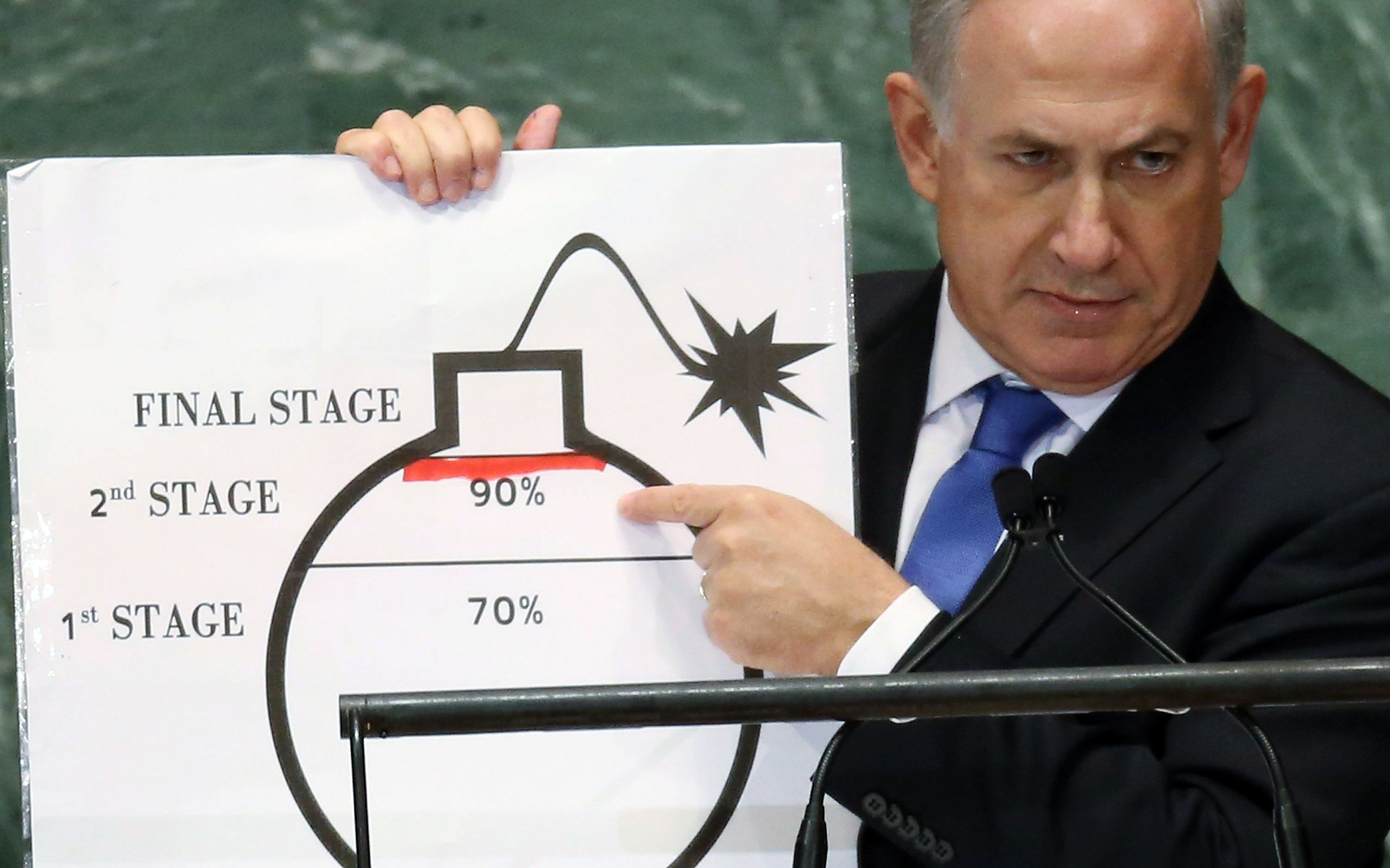
Netanyahu delivered his most infamous warning at the United Nations, holding up a cartoon diagram of a bomb and drawing a red line across it.

He claimed Iran would reach the critical threshold by the following spring or summer.

That deadline came and went — publicly, unmistakably, and without the event he promised.


2015–2020

Even as international inspections and intelligence assessments found no active nuclear weapons program, Netanyahu insisted Iran was merely biding time and that diplomacy was a dangerous illusion.

The “imminent” threat remained — always imminent, never realized.


2024–2025

Netanyahu’s government again asserted that Iran could produce nuclear weapons in a very short time, sometimes described in terms of weeks or months if left unchecked.

This rhetoric was used to justify open military action and to frame escalation as unavoidable.


The Prosecutorial Reality

A prosecutor does not evaluate intent by rhetoric — but by results.

  • Netanyahu has repeatedly asserted specific timeframes.

  • Those timeframes have repeatedly failed.

  • The warnings have been recycled without accountability.

  • Each failed prediction has been followed by a new, equally urgent one.

This is not intelligence error.
It is narrative persistence.

Netanyahu has treated the claim of Iran’s imminent nuclear weapon not as a hypothesis to be tested, but as a political constant, immune to falsification by time.


Moving the Goalposts, Not the Facts

Over the years, the language has subtly shifted:

  • From “years away”

  • To “months away”

  • To “threshold capability”

  • To “breakout time”

Each shift narrows the definition just enough to avoid admitting prior claims were wrong — while preserving the sense of emergency.

This rhetorical maneuver allows the warning to survive failure, even as its original meaning collapses.


The Cost of Permanent Alarm

The consequences of this pattern are not academic.

  • Diplomatic off-ramps were sabotaged

  • Military escalation was normalized

  • Public fear was continuously stoked

  • Skepticism was labeled naïveté

  • Restraint was framed as weakness

When every year is the final warning year, no warning is ever final.

In The End 

For more than 30 years, Benjamin Netanyahu has insisted that Iran was on the verge of acquiring nuclear weapons.

Thirty years later, the bomb he promised has not materialized.

What has materialized is a record — one in which imminence is declared, disproven, and redeclared, again and again, with no reckoning.

At some point, the issue stops being Iran’s timeline and becomes Netanyahu’s credibility.

And on that count, the timeline is no longer on his side.


Monday, February 2, 2026

Declassified FBI Memo Raises Alarming Counterintelligence Questions About Trump — And Why They Were Never Fully Answered


A newly declassified FBI memo from the Epstein files has injected a volatile new dimension into the long-running scandal: credible counterintelligence questions were raised about President Donald Trump — and then left unresolved.

The memo, released January 31, 2026 under court order, records allegations from a confidential human source (CHS) asserting that Trump was “compromised by Israel,” that Jeffrey Epstein operated within an Israeli intelligence orbit, and that key figures surrounding Trump exercised outsized, opaque influence during his presidency.

While the document stops short of verification, its contents are explosive for one reason above all others: the allegations were serious enough to be documented by the FBI — yet the public has never been shown a transparent accounting of how they were investigated, tested, or closed out.

When an Allegation Triggers a Duty — Not a Dismissal

Intelligence professionals note that claims of foreign compromise involving a sitting or former president are not routine tips. They are Category One counterintelligence matters, typically demanding aggressive corroboration or formal disproof.

The memo alleges:

  • Trump was vulnerable to foreign leverage

  • Epstein functioned as a facilitator within elite networks

  • Epstein maintained proximity to senior Israeli officials

  • Jared Kushner wielded extraordinary influence as the “real brains” behind operations

  • Epstein’s legal representation was allegedly used to cultivate elite access

None of this is presented as fact. But none of it is trivial.

The threshold question is not whether the memo proves guilt — it does not.
The question is why the public has never seen evidence that these claims were exhaustively vetted and resolved.

The Pattern Problem

The Epstein case is defined by patterns, not proof points:

  • Epstein’s repeated access to powerful figures

  • Unusual prosecutorial leniency

  • Intelligence community blind spots

  • Destruction or withholding of records

  • And an unexplained death in federal custody

Against that backdrop, the Trump-related allegations do not exist in a vacuum. They sit inside a broader context of systemic failures to pursue uncomfortable lines of inquiry.

Critically, the memo does not document a frivolous internet rumor. It documents an intelligence source alleging foreign leverage over a U.S. president, a claim that — even if false — demands demonstrable closure.

Silence Is Not Exoneration

The Trump White House has dismissed the allegations as “fake news,” and Trump has denied wrongdoing or close ties to Epstein. But denials are not findings, and political rebuttals are not counterintelligence conclusions.

What is missing is a public record showing:

  • How the FBI evaluated the source’s credibility

  • What corroboration was sought

  • What financial, travel, or communications records were examined

  • Whether counterintelligence safeguards were triggered

  • And why the matter did not result in a public determination

In national security cases, silence is not clearance. It is ambiguity.

Kushner, Influence, and Exposure

The memo’s focus on Jared Kushner intensifies scrutiny. As a senior adviser with unprecedented access to classified material and foreign leaders, Kushner operated at the nexus of diplomacy, intelligence, and private business interests.

The source’s claim that Kushner functioned as the true center of gravity behind decision-making raises a stark counterintelligence question: who was influencing the influencer — and with what leverage?

Again, the memo does not answer this. But it does show the FBI was told to consider it.

Why This Still Matters

Unverified allegations do not constitute impeachment. But failure to transparently resolve counterintelligence warnings involving a president constitutes institutional failure.

The release of this memo does not indict Trump.
It indicts a system that repeatedly asks the public to “trust us” — while withholding the receipts.

If the claims were false, the record should show how they were disproven.
If they were plausible, the public deserves to know why accountability never followed.

Bottom Line

This memo does not prove Trump was compromised.
But it does prove the allegation was serious enough to reach the FBI — and important enough to be preserved.

In a democracy, the burden is not on the public to disprove compromise.
The burden is on institutions to prove they investigated it fully.

Until that record is produced, the question will not go away:

Was a warning about foreign leverage over the presidency quietly buried — or decisively resolved behind closed doors?