

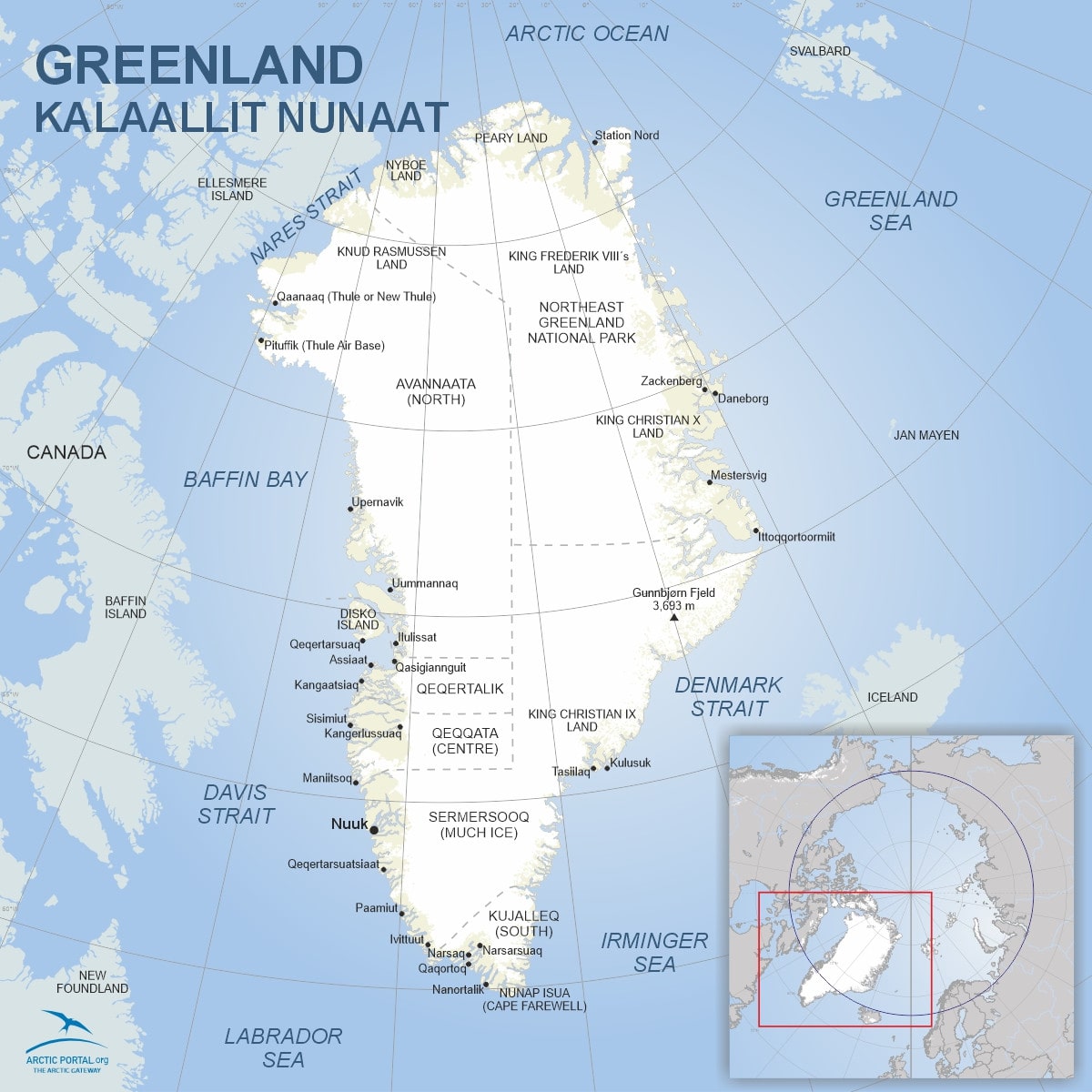
Renewed discussion about a potential U.S. purchase of Greenland has escalated following explosive claims circulating online that allege a deal is already underway—claims that have intensified fears among Greenlanders that their future is being decided without their consent.
The claims originate from commentary attributed to Jakob Munck, who asserts that a recent meeting between Lars Løkke Rasmussen, Vivian Motzfeldt, and U.S. representatives Marco Rubio and JD Vance resulted in the formation of a working group to discuss what were described as the “technical details” of a U.S. “takeover” of Greenland.
No government has publicly confirmed these assertions.
Claims of an imminent takeover
According to the circulating text, the working group is allegedly tasked with finalizing logistics related to U.S. control over airports, harbors, border crossings, and local law enforcement, with claims that Greenland would ultimately be renamed and its flag changed. The post goes so far as to suggest that Karoline Leavitt has confirmed Greenland has “already become American,” leaving only procedural details unresolved.
There is no public evidence supporting those statements, and no such confirmation has been issued by the White House, Denmark, or Greenland’s government.
A familiar pattern: Greenland discussed without Greenland
While the allegations remain unverified, they have struck a nerve in Greenland, where many residents already feel sidelined in high-level geopolitical conversations. Greenland is self-governing in domestic affairs, but foreign policy and defense remain under the authority of Denmark—a structure critics say allows decisions of enormous consequence to be negotiated abroad.
The post explicitly accuses Rasmussen and Motzfeldt of acting without a mandate, labeling their actions “treason” and claiming the Greenlandic public has no say in the matter. Though the language is extreme, it reflects a broader sentiment long expressed by Greenlandic activists: that sovereignty discussions repeatedly occur over Greenlanders’ heads.
Why the U.S. has wanted Greenland since World War II
American interest in Greenland is not new. During World War II, the U.S. assumed responsibility for defending the island after Nazi Germany occupied Denmark, constructing airfields and infrastructure critical to Allied operations. That wartime relationship became permanent during the Cold War and continues today through Pituffik Space Base, a central node in U.S. missile-warning and Arctic defense systems.
In 1946, the United States formally offered to purchase Greenland. The offer was rejected, but the strategic logic behind it never disappeared. As Arctic shipping lanes open, rare-earth minerals become more critical, and global powers expand their northern presence, Greenland’s value has only increased.
Autonomy, not absorption
Despite its strategic importance, many Greenlanders do not want to be absorbed by another state. Public discourse in Greenland has consistently leaned toward greater autonomy or full independence, not a transfer from Danish rule to American sovereignty.
Even those open to deeper cooperation with Washington often stress that Greenlandic language, culture, land rights, and political authority must remain in Greenlandic hands. The resurfacing of purchase claims—especially those suggesting inevitability—has heightened concern that Greenland may once again be treated as an asset rather than a people.
Strategic inevitability vs. democratic consent
Proponents of a U.S. purchase argue that Greenland already exists within the American security sphere and that formalizing the relationship could bring massive infrastructure investment, economic stability, and protection amid intensifying Arctic competition.
Critics counter that geopolitical pressure does not override democratic rights. Under international law and existing agreements, any transfer of sovereignty would require clear, democratic approval from Greenland’s population—a step absent from the claims now circulating.
The unresolved question
Whether or not the current claims prove accurate, they underscore a deeper and recurring issue: Greenland’s strategic importance often outweighs Greenlandic voices in global decision-making.
As the Arctic becomes a central theater of 21st-century geopolitics, the defining question remains unanswered—not whether the United States wants Greenland (it has for decades), but whether Greenlanders will be allowed to decide their own future before others decide it for them.
This story will be updated if official statements or denials are issued by the governments involved.

No comments:
Post a Comment