Wednesday, January 21, 2026

Warrantless ICE Raid on Minnesota Home Sparks Constitutional Outrage After U.S. Citizen Detained at Gunpoint

A disturbing early-morning raid by federal immigration agents in St. Paul, Minnesota is fueling outrage among civil rights advocates, local officials, and constitutional scholars after a U.S. citizen was forcibly removed from his home at gunpoint without a judicial warrant.

According to reporting reviewed by The Associated Press, federal agents affiliated with Immigration and Customs Enforcement broke down the door of a residence and detained ChongLy Scott Thao, despite his family insisting he is a lawful U.S. citizen.

“They Didn’t Show Any Warrant”

Thao told the AP that the incident began Sunday afternoon when his daughter-in-law alerted him that masked agents were banging on the door of his St. Paul home. Thao instructed her not to open it.

Moments later, agents forced their way inside, pointed firearms at family members, and shouted commands.

“I was shaking,” Thao said. “They didn’t show any warrant; they just broke down the door.”

Thao was then reportedly led outside wearing only his underwear in subfreezing temperatures, an image that has intensified public anger and raised serious questions about excessive force and basic human dignity.

Administrative Paperwork — Not a Judicial Warrant

The document used to justify the entry and arrest was not signed by a judge. Instead, it was an administrative immigration warrant, signed by an immigration officer under the Department of Homeland Security.

Legal experts are clear: administrative immigration warrants do not authorize nonconsensual entry into a private home.

Under long-established constitutional law, such documents do not permit forced entry, searches, or seizures inside a residence without either:

  • Consent, or

  • A judicial warrant supported by probable cause and signed by a judge or magistrate.

Fourth Amendment Concerns

The incident has triggered alarm over what many are calling a blatant violation of the Fourth Amendment, which protects Americans against unreasonable searches and seizures.

Law enforcement officers are required to obtain a judicial warrant before entering a home where there is a reasonable expectation of privacy. That warrant must:

  • Be supported by probable cause

  • Specify what can be searched or seized

  • Be approved by a neutral judge

None of those standards appear to have been met in this case, according to the information released so far.

Civil liberties advocates warn that allowing executive agencies to treat administrative paperwork as a substitute for judicial oversight undermines a core safeguard of the Bill of Rights.

Local Leaders Condemn ICE Actions

St. Paul Mayor Kaohly Her, who is Hmong American, issued a sharply worded condemnation following Thao’s detention.

“ICE is not doing what they say they’re doing,” Her said. “They’re not going after hardened criminals. They’re going after anyone and everyone in their path. It is unacceptable and un-American.”

The raid comes amid reports of a surge of federal immigration operations across the Twin Cities, accompanied by growing community backlash over aggressive enforcement tactics, warrantless arrests, and violent encounters with civilians.

A Chilling Precedent

For many Americans, the most troubling aspect of the incident is not just what happened to Thao — but what it signals for everyone else.

The image of armed agents battering down a door without a judge’s authorization, with children inside the home, strikes at the heart of constitutional protections meant to restrain government power.

Legal scholars warn that normalizing warrantless home entries based on administrative immigration documents sets a dangerous precedent, eroding the separation of powers and weakening judicial oversight.

As investigations continue and public pressure mounts, Thao’s case is rapidly becoming a national flashpoint in the debate over immigration enforcement, civil liberties, and whether constitutional rights are being quietly redefined on American soil.


Retaliation in Bethlehem? Raid Claims Emerge After Jerusalem Christian Patriarchs Speak Out


A new wave of controversy erupted online this week after viral posts claimed Israeli forces entered Church of the Nativity and Manger Square in Bethlehem, intensifying fears among Christian leaders that holy sites are being targeted amid mounting political pressure.

The claims surfaced alongside a widely shared exchange on X (formerly Twitter), where U.S. Rep. Matt Gaetz responded to breaking footage posted by journalist Ihab Hassan, dismissing the situation as “obviously Iran’s fault.” The remark drew immediate backlash for sidestepping the specific allegations centered on Bethlehem and Christian holy sites.


Context: Christian Leaders Speak, Tensions Rise

The timing is critical. In recent days, the Jerusalem Christian Patriarchs—representing multiple ancient Christian denominations—issued rare, unified statements condemning escalating violence, restrictions on worship, and what they describe as systematic pressure on Christian communities across the Holy Land.

Within hours of those statements gaining traction, footage circulated online purporting to show Israeli military activity near Christianity’s most sacred locations. While Israeli authorities have not confirmed an “invasion” of the church itself, the optics—armed forces operating in and around Manger Square—were enough to alarm clergy and worshippers worldwide.

Why the Church of the Nativity Matters

The Church of the Nativity is revered as the birthplace of Jesus and is among the oldest continuously operating Christian churches in the world. Any military activity near the site carries immense symbolic weight, particularly during periods of heightened regional conflict.

Christian leaders argue that even limited operations around such locations send a chilling message to already shrinking Christian populations in the occupied West Bank.

Retaliation or Coincidence?

Critics contend the Bethlehem incident appears less like coincidence and more like retaliation—a warning shot following outspoken criticism from Christian authorities in Jerusalem. Supporters of this view point to a broader pattern: raids, checkpoints, and intimidation intensifying after international or religious leaders speak out.

Israeli officials and their defenders counter that security operations are routine and unrelated to clerical statements, emphasizing regional threats and the wider Israel–Iran confrontation. Yet that explanation has done little to quell anger among Christians who feel increasingly sidelined in geopolitical narratives.

Global Reaction and Moral Reckoning

Church leaders across Europe, Latin America, and the United States have called for independent verification and protections for holy sites. Human rights advocates warn that normalizing military presence around places of worship—especially those central to global Christianity—risks accelerating the exodus of Christians from the Holy Land altogether.

As images from Bethlehem continue to circulate, the episode has become more than a dispute over facts. It is a moral and symbolic flashpoint—testing whether ancient Christian communities have meaningful protection when they challenge power, or whether speaking out now comes with consequences.

What happens next may determine not only the safety of sacred sites, but the future of Christianity’s oldest communities in the land where the faith was born.

Miami Nightclub Incident Triggers Backlash After Banned Ye Track Is Played


Miami, Florida — A late-night incident at a Miami nightclub has ignited a firestorm online after local reporting claimed a banned song by Ye (formerly Kanye West) was played during a club appearance involving a cluster of controversial internet personalities.

According to early reports circulating out of Miami, individuals allegedly present or associated with the incident included Andrew Tate, Tristan Tate, Nick Fuentes, Sneako, Myron Gaines, and another figure identified online as Clavicular.

While details remain disputed, reports claim the song—one of several tracks by Ye that venues and platforms have distanced themselves from due to prior controversies—was played inside the club, prompting swift consequences.

Employees Fired, Industry Reaction Follows

Local outlets report that two club employees were terminated for playing the track. In the aftermath, multiple Miami nightlife venues are said to be informally or formally barring those associated with the incident from entry. No unified statement has been issued by Miami’s nightlife industry as a whole, but the response appears coordinated enough to signal reputational risk management across venues.

At the time of publication, it remains unclear:

  • Who specifically requested the song

  • Whether those named directly instructed staff to play it

  • Whether any formal bans have been issued in writing

Several of the individuals mentioned have denied direct involvement or have not commented publicly.

Free Speech vs. Private Venue Power

The incident has rapidly become a proxy battle in the ongoing debate over free expression versus private business discretion.

Supporters of the club bans argue:

  • Nightclubs are private businesses with the right to set standards

  • Playing a track widely considered inflammatory risks alienating patrons

  • Venues must protect staff and brand reputation

Critics counter that:

  • Punishing staff for playing music crosses into ideological enforcement

  • Blacklisting individuals based on association sets a dangerous precedent

  • Cultural expression is being quietly policed without transparency

Legal experts note that private venues are not bound by First Amendment obligations, meaning bans and firings—while controversial—are generally lawful unless they violate labor contracts or discrimination statutes.

Online Fallout and Cultural Flashpoint

Social media reaction has been swift and polarized. Some users view the response as necessary accountability in a volatile cultural moment, while others see it as evidence of soft censorship and collective punishment by association.

What’s clear is that Miami’s nightlife scene—long known for pushing boundaries—has found itself at the center of a national conversation about where culture, controversy, and commerce collide.

As more facts emerge, the incident may fade as a viral moment—or solidify as another marker in the growing tension between art, politics, and private power in public spaces.

Americans Fleeing Trump End Up in Dutch Refugee Camps — A Reality Check Gone Wrong


There are bad political decisions — and then there are life-altering ones that don’t come with a reset button.

A small but growing number of American citizens who left the United States to “escape” Donald Trump and his MAGA movement are now facing harsh conditions in Dutch refugee camps, according to multiple European media reports. What was imagined as a safe political refuge has instead turned into a sobering reality inside overcrowded asylum facilities.

Reports from Daily Mail and The Guardiansay that 76 U.S. citizens applied for asylum in the Netherlands last year — a sharp jump from just nine the year before.

Many of the Americans seeking asylum identify as transgender or are parents of transgender children. They are reportedly housed in a segregated “queer block” at a refugee camp in Ter Apel, a northern Dutch village that has become notorious for overcrowding and deteriorating conditions.

Descriptions of the camp are bleak. Residents compare it to a prison-like environment, with constant guard presence, daily bed checks, and shared facilities described as filthy and unsanitary. While asylum seekers are technically allowed to leave the grounds, they must return every night and survive on a small government allowance to buy food and cook in communal kitchens.

The Americans involved say they fled what they describe as increasing hostility toward LGBTQ individuals in parts of the United States. However, Dutch asylum authorities — including officials in the country’s traditionally progressive asylum ministry — have so far rejected the idea that alleged mistreatment of LGBTQ people in the U.S. meets the legal threshold for refugee status.

Under European asylum law, refugee protection is reserved for people fleeing war, state-sponsored persecution, or situations where a government is unable or unwilling to protect its citizens. The United States, regardless of political disagreements, is still classified as a stable democracy with functioning courts and legal protections — a key reason Dutch officials remain skeptical of the claims.

For critics, the situation has become a cautionary tale about political fear overtaking reality. Leaving the U.S. out of ideological opposition to Trump may have felt symbolic, even righteous, to some. But the result has been life inside an overstretched refugee system designed for victims of war — not Americans protesting an election outcome.

What many expected to be a political statement has instead turned into a harsh lesson: Europe’s asylum system is not a protest movement, and refugee camps are not sanctuaries from domestic political disagreement.

In the end, the very people who claimed America had become unlivable have found themselves living under conditions far worse — not because of Trump, but because asylum law does not offer asylum to LGBTQ. 

Former ICE Detention Officer Pleads Guilty to Sexually Abusing Nicaraguan Woman in Custody

BASILE, La. — A former Immigration and Customs Enforcement (ICE) detention officer has pleaded guilty in federal court after admitting to sexually abusing a Nicaraguan woman while she was being held in an immigration detention facility in Louisiana.

David Courvelle, 56, worked as a contract detention officer at the South Louisiana ICE Processing Center in Basile. Federal prosecutors say Courvelle exploited his authority over the woman, who was detained at the facility and separated from her young daughter, by coercing her into repeated sexual encounters while she remained under his supervision.

According to court records, the abuse occurred multiple times in 2025 while the woman was in federal custody. Prosecutors stated that Courvelle used his position to manipulate and control the detainee, offering privileges and access to items connected to her child — including photographs and correspondence — in exchange for sexual acts.

Because the woman was legally unable to leave the facility or freely refuse contact with a detention officer, federal law classifies any sexual contact as abuse, regardless of claims of consent. Authorities emphasized that detainees are considered wards of the government and are especially vulnerable to coercion.

Investigators say Courvelle’s conduct came to light after staff members observed suspicious interactions between him and the detainee, including the pair exiting restricted areas together. An internal investigation followed, and Courvelle was removed from duty before eventually resigning.

Initially, Courvelle denied wrongdoing during interviews with federal investigators. He later admitted to the sexual abuse and entered a guilty plea to a felony charge of sexual abuse of a person in federal custody. The offense carries a possible sentence of up to 15 years in prison.

The case has intensified scrutiny of ICE detention facilities and the use of private contractors to staff them. Advocacy groups argue that the incident reflects broader systemic failures in oversight and accountability, particularly involving the treatment of women and asylum seekers held in detention.

A sentencing hearing is scheduled for later this year. The victim’s immigration case remains pending, and federal officials have not disclosed her current status.


Pam Grier’s Story on The View Sparks Backlash — and a Bigger Question About Truth and Memory


When Pam Grier appeared on The View, few expected her comments to ignite a national argument about history, memory, and credibility.

But that’s exactly what happened.

During the discussion, Grier described growing up in Ohio and said that as a child she had to close her eyes to avoid seeing Black people hanging from trees. The statement was shocking, emotional, and instantly viral. For many viewers, it landed as a painful reminder of America’s brutal racial past.

Then people started checking the timeline.


When the Dates Don’t Line Up

Pam Grier was born in 1949. According to historical records, the last documented lynching in Ohio occurred in 1932 — nearly two decades before her birth.

That gap is what set off the backlash.

Critics weren’t arguing that lynching didn’t happen. No serious person disputes that reality. Lynching was widespread, horrific, and left scars that still exist today. The issue wasn’t the history — it was the way the story was told.

If Grier was talking about stories passed down through family, community trauma, or the psychological weight of growing up in the shadow of that violence, many say that should have been made clear. Presenting it as a firsthand childhood experience, they argue, is where credibility begins to crack.


Why This Matters More Than People Think

This isn’t about nitpicking or playing “gotcha.” It’s about trust.

When public figures speak about historical atrocities, especially on national television, people expect honesty and precision. When the facts don’t hold up, it gives skeptics an easy excuse to dismiss real injustices — and that hurts everyone.

There’s also a deeper issue at play: emotional truth versus factual truth.

For many Black families, the stories of racial terror are so vivid, so deeply embedded, that they feel lived. Generational trauma doesn’t need a timestamp to be real. But emotional truth still needs clear framing, especially when millions of people are listening.


Honoring History Means Getting It Right

Lynching is not ancient history. Its legacy didn’t end when the last rope was cut down. But honoring the victims of that violence means telling the story accurately — not stretching timelines or blurring lines between memory, inheritance, and lived experience.

When stories fall apart under basic scrutiny, they don’t strengthen the conversation. They weaken it. They create division, skepticism, and backlash where understanding should exist.


Release the Epstein Files: Why People Aren’t Buying Scott Jennings’ Dismissal


The tense back-and-forth on CNN between Leigh McGowan and Republican strategist Scott Jennings struck a nerve — not because it was loud or dramatic, but because it exposed just how far apart Americans are when it comes to trust, power, and accountability.

At the center of it all is Jeffrey Epstein — a name that still sparks anger years after his death, precisely because the story never actually ended.


Why Jennings’ Take Feels So Frustrating

Scott Jennings’ argument is familiar by now:
There’s no proven conspiracy. There’s no concrete evidence tying powerful people to crimes. So it’s time to stop speculating and move on.

On paper, that sounds reasonable. In real life, it feels deeply out of touch.

What people are asking for isn’t rumor or revenge. They’re asking for access to the truth — the truth that’s still locked behind sealed court records, redacted names, and quietly buried agreements.

When Jennings waves away public outrage as conspiracy thinking, it lands less like caution and more like dismissal. As if Americans are foolish for noticing that this case has been handled very differently than almost any other trafficking case in modern history.


McGowan Says What a Lot of People Are Thinking

Leigh McGowan didn’t argue from ideology — she argued from common sense.

Epstein didn’t run a trafficking operation alone.
He didn’t magically obtain protection without help.
And he didn’t receive an outrageously lenient plea deal by coincidence.

McGowan’s point wasn’t that everyone associated with Epstein is guilty. It was simpler than that: power changes outcomes. It always has.

When wealth, politics, and influence enter the picture, the justice system tends to slow down, soften, or look the other way. That’s not a theory — it’s history.


The Case Wasn’t Solved — It Was Cut Short

Calling the Epstein scandal “over” because Epstein is dead feels like a technicality, not a resolution.

Dead men don’t testify.
Dead men don’t implicate others.
Dead men conveniently end investigations.

Meanwhile, survivors have repeatedly said Epstein wasn’t acting alone. Courts have acknowledged the existence of co-conspirators — while keeping critical records sealed. That contradiction is exactly why the public refuses to let this go.

If the system wants trust, secrecy is the worst possible strategy.


“No Charges” Doesn’t Mean “Nothing Happened”

Jennings leans hard on the lack of prosecutions. But people aren’t naĂ¯ve. They understand how the system works — and how it can be made not to work.

Prosecutors choose what to pursue.
Deals get cut behind closed doors.
Evidence gets sealed.
Statutes of limitation quietly expire.

The Epstein case checks every one of those boxes.

So when viewers hear “there’s no evidence,” what they often hear instead is: you’re not allowed to see it.


The Ask Is Simple: Open the Files

This isn’t radical. It isn’t partisan. It isn’t reckless.

Unseal the records.
Release the flight logs.
Unredact the depositions.
Let facts speak for themselves.

If Scott Jennings is right — if there truly is nothing there — transparency would put the issue to rest overnight. The resistance to disclosure is exactly what keeps suspicion alive.


The Bottom Line

People aren’t obsessed with Epstein because they enjoy outrage. They’re obsessed because this case feels like proof that there are two justice systems — one for everyone else, and one for the powerful.

Every time someone on television tells the public to “move on” without releasing the truth, it doesn’t calm the anger. It confirms it.

Until the Epstein files are fully released, this story isn’t going anywhere — and neither is the distrust it represents.

Marjorie Taylor Greene Warns MAGA “Hive Mind” Is Driving Voters Away From the GOP


Washington, D.C. — Former U.S. Rep. Marjorie Taylor Greene has issued a blunt warning to the Republican Party, arguing that rigid “MAGA purity tests” and loyalty demands are alienating voters and putting future elections at risk.

Greene, who officially resigned from Congress on January 5, 2026, said the expectation of a uniform “MAGA hive mind” discourages independent thought and is causing Americans to “drop like flies” from political engagement. In her view, the pressure to conform has created a culture that prioritizes allegiance over debate—an approach she says undermines the party’s ability to broaden its appeal.

“People have an inherent right to their own opinions and disagreements,” Greene argued, framing free speech as a cornerstone of American life that should not be sacrificed for partisan conformity. She maintained that voters are increasingly fatigued by movements that punish dissent, even when criticism is rooted in shared goals.

Accountability and Broken Promises

Greene also emphasized that voters who elevate a party or leader have every right to hold that government accountable for campaign promises. She said political loyalty should function as a two-way street—earned through results and transparency, not demanded through fear of ostracism.


Her remarks come amid a highly public fallout with President Donald Trump, who publicly branded Greene a “traitor” and a “rotten apple.” The rift widened after Greene pressed for the release of Epstein-related files and criticized elements of the administration’s foreign and economic policies.

A Broader Warning Ahead of 2026

As she transitions out of office, Greene has framed her departure as a chance to speak more freely about what she sees as structural problems within the movement she once championed. She rejected comparisons that cast dissenters as disloyal, saying she refuses to be a “battered wife” to any political cause that has, in her words, lost sight of everyday Americans.

Whether Greene’s warning resonates within GOP leadership remains to be seen. But with the 2026 election cycle approaching, her critique highlights a growing debate inside conservative politics: how to balance movement discipline with the diversity of views needed to win—and keep—voters.

Minnesota Police Leaders Condemn ICE After Off-Duty Brooklyn Park Officer Stopped

ST. PAUL, Minn.  — A growing rift between local law enforcement and federal immigration agents is drawing statewide attention in Minnesota after an off-duty Brooklyn Park police officer was stopped and questioned by U.S. Immigration and Customs Enforcement (ICE), an incident police leaders say reflects a broader pattern of troubling conduct.

At a press conference at the Minnesota State Capitol, police chiefs from several Twin Cities departments publicly criticized ICE operations in the region, saying aggressive enforcement tactics are leading to civil-rights concerns, dangerous encounters, and a breakdown of trust between agencies.

Off-Duty Officer Boxed In, Asked for Proof of Citizenship

According to Brooklyn Park Police Chief Mark Bruley, the off-duty officer was driving her personal vehicle when she was boxed in by unmarked federal vehicles and confronted by ICE agents. She was reportedly asked to provide proof of U.S. citizenship, despite being a citizen and sworn law-enforcement officer.

Bruley said agents had firearms drawn during the encounter and that when the officer attempted to record the interaction on her phone, an agent knocked the device out of her hand. The encounter ended only after she identified herself as a police officer, at which point the agents left without further explanation.

Local police leaders say the officer was not suspected of any crime and was not the target of an immigration investigation.

Police Chiefs Say Incident Is Not Isolated

Multiple law-enforcement officials stressed that the Brooklyn Park incident is not an outlier. Chiefs from St. Paul, Minneapolis, and Hennepin County say they have received a growing number of complaints from residents — and even from off-duty officers — describing similar stops by federal agents.

“These aren’t criminals being stopped,” Bruley said. “These are people going about their lives — including our own officers — being questioned and detained without clear cause.”

Officials warned that such encounters risk escalating into dangerous situations and undermine community trust in law enforcement overall.

Civil Rights and Safety Concerns

Police leaders emphasized that they are not opposed to lawful immigration enforcement but argue that federal agents must operate within constitutional limits and coordinate more effectively with local departments.

They expressed concern that aggressive stops, particularly those involving drawn weapons and demands for proof of citizenship, could violate civil rights and disproportionately impact people of color and U.S. citizens.

“If this is happening to trained officers who understand the law, imagine what it’s like for everyday residents,” one chief said.

Broader Tensions Over ICE Operations

The controversy comes amid an expanded federal immigration operation across Minnesota, part of a larger national enforcement push. The increased presence of ICE has already sparked protests, lawsuits, and political fallout following several high-profile incidents, including a fatal shooting involving an ICE agent earlier this month.

State and city leaders have called for clearer oversight and accountability, while federal authorities have defended their operations as lawful and necessary.

Calls for Accountability and Oversight

Local law-enforcement agencies are now documenting complaints and exploring legal and administrative options to address the situation. Police leaders are urging federal agencies to establish clearer rules of engagement and to respect constitutional protections during enforcement actions.

For now, Minnesota officials say the Brooklyn Park incident has become a turning point — raising uncomfortable questions about how federal immigration enforcement is being carried out and who is being caught in the middle.


Air Force One Returns to Washington After Mechanical Issue Forces Trump to Abort Overseas Flight


WASHINGTON — A flight carrying President Donald Trump aboard Air Force One was forced to turn back to Washington late Monday after a mechanical issue was detected shortly after takeoff, according to White House officials.

The aircraft departed Joint Base Andrews en route to Europe when flight crews identified what officials later described as a minor electrical problem. Out of caution, the pilots made the decision to return to Washington rather than continue the transatlantic journey.

Reporters traveling with the president said lights in the press cabin briefly went dark, an incident consistent with the electrical issue later acknowledged by the White House. The aircraft landed safely back at Joint Base Andrews, and no injuries or emergencies were reported.

“The aircraft returned as a precaution after the crew identified a technical issue,” a White House official said, emphasizing that the decision was made in line with standard safety protocols.

Trip Delayed, Not Canceled

Following the return, President Trump and his delegation transferred to a different aircraft to continue their travel plans. The interruption delayed, but did not cancel, the president’s scheduled appearance at the World Economic Forum in Davos, Switzerland.

The White House did not indicate how long the original aircraft would be out of service, nor did it provide additional technical details beyond describing the issue as electrical and non-threatening.

Aging Aircraft Under Renewed Scrutiny

The incident has renewed attention on the age of the current Air Force One fleet. The two Boeing VC-25A aircraft currently in use have been flying since the early 1990s. While they are extensively maintained and considered among the safest aircraft in the world, even minor anomalies trigger immediate caution due to the president’s presence.

Aviation experts note that turning back for relatively small technical irregularities is routine for presidential flights, especially before crossing the Atlantic, where diversion options are more limited.

Despite the disruption, officials stressed that there was never a danger to the president, and the incident was handled exactly as designed.

Bottom Line

The brief scare underscores the zero-risk tolerance built into presidential travel. Even minor system irregularities on Air Force One prompt immediate action — a reminder that when it comes to the commander in chief, precaution always overrides convenience.


Tuesday, January 20, 2026

Birthright Citizenship A Huge Change A Real Possibility


Image


Supreme Court Set for Landmark Showdown on Birthright Citizenship

WASHINGTON — January 2026 — The future of birthright citizenship in the United States is headed for a historic reckoning at the Supreme Court of the United States, following a sweeping executive action by President Donald Trump that aims to dramatically narrow who qualifies for citizenship at birth.

The Court agreed on December 5, 2025, to review the legality of Executive Order 14160, signed by Trump on his first day back in office on January 20, 2025. The order seeks to end automatic citizenship for children born in the U.S. unless at least one parent is a U.S. citizen or lawful permanent resident.

Timeline and What Comes Next

Oral arguments are expected in spring 2026, with a ruling anticipated by late June or early July. Until then, the policy remains blocked by lower courts, meaning children born on U.S. soil to undocumented or temporary-status parents continue to receive citizenship under existing law.

Legal scholars say the case could become one of the most consequential constitutional decisions in decades, with implications reaching far beyond immigration policy.

The Core Legal Dispute

At the heart of the case is the 14th Amendment, which declares that “all persons born or naturalized in the United States, and subject to the jurisdiction thereof,” are citizens.

Civil rights groups, including the American Civil Liberties Union, argue the amendment’s meaning has been settled for more than 150 years. They contend the executive order directly contradicts longstanding constitutional interpretation and Supreme Court precedent.

The Trump administration, however, maintains that the amendment’s “subject to the jurisdiction thereof” clause was never intended to cover children of parents who are in the country illegally or on temporary visas. The Department of Justice argues that modern immigration realities demand a narrower reading.

Key Legal Developments

A pivotal moment came in July 2025, when a federal judge issued a preliminary injunction in a class-action lawsuit known as Barbara v. Trump. The ruling protects all children born in the United States—regardless of their parents’ immigration status—while the litigation proceeds.

That case took on added importance after a June 2025 Supreme Court decision limited the power of lower courts to issue broad nationwide injunctions against federal policies. The class-action structure in Barbara was designed to preserve nationwide protections despite those limits.

Meanwhile, congressional Republicans introduced the Birthright Citizenship Act of 2025, aiming to codify similar restrictions into federal law, though the bill has yet to advance.

A Century of Precedent at Stake

If the Supreme Court ultimately upholds the executive order, it would overturn more than a century of constitutional precedent—most notably the 1898 ruling that affirmed citizenship for children born in the U.S. to non-citizen parents.

Legal experts warn such a decision could reshape American citizenship itself, potentially creating a new class of U.S.-born residents without nationality at birth and inviting further legal challenges across the country.

As the case heads toward oral arguments, both sides agree on one point: the Court’s decision will redefine the meaning of citizenship in America for generations to come.

Trump Teases Aggressive Stance on Greenland, Raises Alarms About NATO’s Future

 Image

Image


At a lengthy White House press briefing Tuesday afternoon, Donald Trump delivered a familiar mix of bravado, grievance, and provocation—ending with a remark that immediately set off international shockwaves.

When a reporter asked how far he would be willing to go to acquire Greenland, Trump responded curtly: “You’ll find out.”

The exchange came at the tail end of a marathon, two-and-a-half-hour appearance in the White House press room. For most of the briefing, Trump touted what he called his accomplishments over the past year, touching repeatedly on immigration enforcement, Immigration and Customs Enforcement arrests, foreign policy, and his belief that he deserves a Nobel Peace Prize. He also revisited criticisms of Joe Biden, continuing a long-running pattern of contrasts between his presidency and the previous administration.

But it was the final question that shifted the tone.

A reporter pressed Trump on the geopolitical consequences of forcibly or coercively acquiring Greenland, noting that such a move could fracture the Western alliance and potentially trigger the collapse of NATO.

“Is that the price you’re willing to pay?” the reporter asked.

Trump did not directly answer. Instead, his earlier comment—“You’ll find out”—hung in the room, signaling neither retreat nor reassurance.

A Longstanding Obsession, Reframed as a Threat

Trump’s interest in Greenland is not new. During his first term, he openly floated the idea of purchasing the island, prompting swift rejection from Denmark and awkward diplomatic fallout. At the time, the proposal was treated by many as unserious or symbolic.

This time, the framing is different.

By linking Greenland acquisition—implicitly or explicitly—to the potential breakup of NATO, Trump elevated the issue from a curiosity to a geopolitical ultimatum. Greenland’s strategic importance has only grown in recent years due to Arctic shipping routes, rare earth minerals, and military positioning amid rising tensions with Russia and China.

What remains unclear is whether Trump is signaling actual policy intent or leveraging ambiguity as a negotiating tactic. His refusal to clarify leaves allies guessing and adversaries watching closely.

Allies on Edge

Any move perceived as threatening NATO cohesion would represent a dramatic departure from decades of U.S. foreign policy. The alliance has long been the backbone of American and European security, and Greenland—while sparsely populated—plays a key role in Arctic defense and early-warning systems.

Trump’s comment suggests he may be willing to test those assumptions.

For now, there are no formal plans, no outlined strategy, and no diplomatic overtures announced. Just a familiar Trump hallmark: strategic ambiguity paired with maximum attention.

Whether it was bluster, warning, or preview remains to be seen. As Trump himself put it, “You’ll find out.”

Minnesota Man Detained by ICE After Lawfully Recording Agents Sparks Constitutional Outrage


A Minnesota man’s nine-hour detention by federal immigration agents is drawing national attention and raising serious constitutional questions about free speech, lawful observation, and abuse of federal authority.

Ryan Ecklund, a Minnesota resident, says he was detained by U.S. Immigration and Customs Enforcement (ICE) after he followed and recorded agents in public — while maintaining distance, obeying all traffic laws, and never interfering with their work.

At the center of the controversy is a simple but profound question: Can Americans lawfully observe and record federal agents in public without fear of detention?

What Happened

According to Ecklund, he noticed multiple ICE vehicles conducting operations in his community and began recording them from his own vehicle. He says he:

  • Remained a significant distance away at all times

  • Followed all traffic laws

  • Did not block, obstruct, or interfere with agents

  • Filmed only from public roadways

Despite this, Ecklund says ICE agents repeatedly told him to stop following them — not because he had broken the law, but simply because they did not like being watched.

Eventually, agents stopped his vehicle, detained him, confiscated his phone, and transported him to a federal detention facility, where he was held for approximately nine hours. He was never charged with a crime and was ultimately released.

A Clear First Amendment Issue

Legal experts and civil liberties advocates have long affirmed that recording law enforcement in public is protected by the First Amendment. Courts across the country have repeatedly ruled that citizens have the right to document government officials performing public duties in public spaces.

Ecklund’s actions — observing, filming, and following at a lawful distance — fall squarely within those protections.

There is no law that prohibits following government vehicles on public roads. There is no law that bars recording federal agents in public. And there is no constitutional authority allowing agents to detain someone simply for monitoring them.

Detaining a citizen for lawful observation is not law enforcement — it is retaliation.

Detention Without Charges

Perhaps most alarming is the length of Ecklund’s detention. Holding an American citizen for nine hours without charges, probable cause, or evidence of a crime raises serious Fourth and Fifth Amendment concerns.

The Constitution does not permit the government to detain citizens simply to:

  • Intimidate them

  • Punish them for lawful speech

  • Discourage public oversight

When federal agents act this way, they undermine public trust and erode the very freedoms they are sworn to uphold.

A Chilling Effect on Public Oversight

Cases like Ecklund’s send a dangerous message: watch the government too closely, and you may pay a price.

This chilling effect is precisely what the First Amendment was designed to prevent. The founders understood that liberty depends on the public’s ability to scrutinize power — especially armed power.

If federal agents can detain citizens simply for filming them, then constitutional rights become conditional, subject to the comfort level of those in authority.

That is not how a free society works.

Why This Case Matters

Ryan Ecklund’s detention is not just about one man — it is about whether constitutional rights still apply when federal agencies feel inconvenienced.

The Constitution does not yield to agency preference. It does not disappear during immigration operations. And it does not allow government officials to silence lawful observers through detention and intimidation.

Ecklund did what the Constitution allows — and arguably encourages — citizens to do: pay attention.

The Bigger Picture

At a time when federal enforcement actions are expanding and tensions are high, this incident serves as a stark reminder that constitutional rights must be defended most aggressively when they are least convenient for those in power.

If Ryan Ecklund’s detention is allowed to stand without accountability, it sets a precedent that should concern every American — regardless of political beliefs.

Because once the government decides that observing it is a crime, freedom becomes an illusion.


Constitutional Law Breakdown: Why This Detention Is Legally Dangerous

First Amendment — Free Speech and Press

The First Amendment protects not only speech, but the right to gather information about the government. Federal courts have repeatedly held that recording law enforcement officers in public spaces is protected expressive conduct.

Ryan Ecklund’s filming and following at a lawful distance qualifies as:

  • Newsgathering

  • Political expression

  • Public oversight

Detaining someone for exercising these rights constitutes viewpoint discrimination and retaliation, both of which are strictly prohibited under constitutional law.

Fourth Amendment — Unreasonable Seizure

The Fourth Amendment prohibits unreasonable searches and seizures. A detention requires:

  • Probable cause of a crime or

  • At minimum, reasonable suspicion of criminal activity

Ecklund was:

  • Following traffic laws

  • On public roads

  • Not interfering with agents

Absent criminal conduct, detaining him for nine hours amounts to an unlawful seizure. Lengthy detention without cause transforms a stop into a constitutional violation.

Fifth Amendment — Due Process

The Fifth Amendment guarantees that the government cannot deprive a person of liberty without due process of law.

Holding a citizen for nine hours:

  • Without charges

  • Without a warrant

  • Without access to counsel

  • Without explanation

Raises serious due process violations. Detention used as punishment or intimidation — rather than law enforcement — is unconstitutional on its face.

Fourteenth Amendment — Equal Protection (In Practice)

While technically applied to states, federal courts recognize that selective enforcement and retaliatory detention violate equal protection principles.

If Ecklund was detained because of what he was recording, not because of what he was doing illegally, that indicates selective and punitive enforcement — a hallmark of constitutional abuse.

Ryan Ecklund’s detention was not just excessive — it was constitutionally indefensible.

When federal agents detain citizens for lawful observation, they cross the line from enforcement into suppression. And when that line is crossed without consequence, the Constitution is no longer a shield — it becomes a suggestion.

Greater Israel in Action: Why Israeli Presence in Southern Lebanon Is Not an Accident


A viral video circulating on social media is drawing renewed attention to a reality many analysts and historians have warned about for decades: Israel’s territorial ambitions do not end at its current borders.

The footage shows an Israeli rabbi, escorted by armed protection reportedly connected to the Israel Defense Forces, standing in or near the Lebanese border village of Marwahin. The video’s captions allege Israeli activity inside Lebanese territory and frame the moment as part of the Greater Israel project—a claim dismissed by Israeli officials, yet deeply rooted in Israel’s political and religious history.

The Greater Israel Project Is Real—And Well Documented

Despite repeated efforts to label it a “myth” or “extremist fantasy,” the concept of Greater Israel is not imaginary. It has appeared explicitly and implicitly in Zionist writings, religious-nationalist movements, political party platforms, and public statements by Israeli leaders over decades.

Maps depicting Israel extending into the West Bank, Gaza, southern Lebanon, parts of Syria, and Jordan have been displayed by Israeli officials, circulated in settler movements, and normalized in far-right Israeli political culture. This ideology is not marginal—it is represented in Israel’s governing coalition, particularly among religious nationalist and settler factions.

Southern Lebanon as the Next Frontier

Israel’s repeated military operations in southern Lebanon are officially framed as “security responses.” In practice, they function as territorial conditioning—normalizing Israeli movement, surveillance, and authority beyond the internationally recognized border.

The presence of a civilian religious figure under armed escort inside or near Lebanese territory is not incidental. It mirrors a familiar pattern seen previously in the West Bank, where symbolic acts preceded military entrenchment, followed by settlement expansion and eventual de facto annexation.

What begins as “temporary security necessity” often becomes permanent control.

Annexation Without the Paperwork

Israel has perfected a model of expansion that avoids formal declarations while achieving the same outcome. Borders are not redrawn on paper—they are erased on the ground.

This method allows Israeli officials to deny annexation publicly while exercising total control through force, intimidation, and normalization of presence. The same tactic has already been applied to Palestinian territories, where international law has been ignored without meaningful consequence.

Southern Lebanon now appears to be entering a similar phase.

International Silence Enables Expansion

Israel’s actions persist not because they are legal, but because they are tolerated. The international community, particularly the United States and European powers, has repeatedly shielded Israel from accountability while condemning similar actions elsewhere.

This double standard sends a clear message: Israeli expansion will not be stopped.

Lebanon, already weakened by internal crisis and economic collapse, is especially vulnerable. Israeli incursions—whether military, symbolic, or ideological—test how far borders can be pushed without triggering a serious response.

This Is Not About Security

If Israel’s actions were purely defensive, they would not involve religious symbolism, civilian figures, or ideological signaling. These elements reveal intent—not deterrence.

The Greater Israel project is not a future threat. It is an ongoing process, unfolding incrementally, shielded by denial and enabled by global inaction.

The video from southern Lebanon should not be dismissed as social media exaggeration. It is a warning sign—another step in a long, documented pattern of territorial expansion carried out under the guise of security.

History shows that when Israel moves into disputed land, it rarely leaves.

Southern Lebanon may be next.


Legal Case Against Norway Princess's Son: Rape, Violence, and Expanding Narcotics Charges


The criminal case against Marius Borg Høiby, the 29-year-old son of Crown Princess Mette-Marit, has become one of the most damaging scandals to engulf Norway’s monarchy in decades—raising serious questions about privilege, accountability, and how long warning signs were ignored.

Although the palace insists Høiby holds “no official royal role,” he has spent his entire adult life moving inside royal circles, elite social networks, and institutional protection that ordinary Norwegians do not enjoy. That context matters.

1. Rape and Violent Crime Allegations

In August 2025, Norwegian prosecutors filed a sweeping indictment accusing Høiby of 32 criminal offenses, including some of the most serious crimes in Norwegian law.

The charges include:

  • Rape of four women, allegedly occurring between 2018 and 2024

  • Domestic violence, assault, threats, vandalism, and restraining-order violations

  • Allegations that some victims were incapable of resisting, including situations following prior consensual contact

  • Prosecutors say digital evidence supports several of the accusations

Høiby has denied most of the rape and violent assault charges.

The trial is scheduled to begin February 3, 2026, in Oslo District Court, and is expected to last several weeks.

What has disturbed many observers is not only the volume of allegations, but the time span—suggesting years of alleged behavior without meaningful intervention, despite repeated police contact.

2. New Narcotics Charges Add to the Pattern

In January 2026, prosecutors expanded the indictment again.

New charges include:

  • A serious narcotics offense tied to the alleged transport of approximately 3.5 kilograms of marijuana in July 2020

  • Høiby has admitted to transporting the drugs, claiming it was unpaid and a one-time act

  • Additional counts involving restraining-order violations and dangerous traffic offenses, including high-speed motorcycle driving

With these additions, Norwegian media report up to 38 separate criminal counts—a staggering number for anyone, let alone someone raised under the shadow of the crown.

3. The Royal Family’s Silence—and Its Consequences

The Royal Court has largely responded with silence and carefully worded statements about “respecting the judicial process.” Critics argue that this restraint looks less like dignity and more like institutional avoidance.

Key concerns raised by the public include:

  • Why repeated arrests and investigations since 2024 did not trigger earlier intervention

  • Whether royal proximity discouraged tougher scrutiny

  • How much the palace knew—and when

  • Whether victims felt intimidated by the accused’s royal connections

Norwegian authorities insist Høiby is being treated like any other defendant. But public trust has been shaken by the perception that royal adjacency delays consequences, even when allegations pile up.

4. Potential Prison Time

If convicted, the combined charges—rape, violent crime, and serious narcotics offenses—could result in a lengthy prison sentence, potentially a decade or more, depending on final verdicts and sentencing decisions.

For a monarchy that trades heavily on moral authority and public trust, the implications go far beyond one defendant.


Bigger Than One Man

This case is no longer just about Marius Borg Høiby. It is about:

  • A royal family that embraced the language of modernity while failing to confront internal rot

  • A justice system now under pressure to prove that bloodlines don’t soften the law

  • Victims who allege years of harm while the accused moved freely within elite protection


A legal showdown is brewing between conservative activist organization Turning Point USA and independent media outlet Wolves & Finance, after TPUSA’s attorneys sent a formal cease-and-desist letter accusing the outlet of publishing false and defamatory claims.

The multi-page letter, dated January 8, 2026, was issued by SouthBank Legal on behalf of TPUSA and its affiliated entities, including Turning Point Action, Turning Point Endowment, America’s Turning Point, and Turning Point PAC. It is addressed to Zach De Gregorio, who hosts and operates the Wolves & Finance website and YouTube podcast.

Allegations of “Demonstrably False” Claims

According to the letter, TPUSA claims De Gregorio made repeated false statements during YouTube episodes aired on November 16 and November 30, 2025, including allegations of internal fraud, improper financial transfers, and misleading claims about audits and IRS filings.

Among the specific statements challenged:

  • Claims that Charlie Kirk ordered a so-called “DOGE-style audit” that never occurred

  • Assertions that TPUSA-affiliated entities failed to file IRS Form 990s for fiscal year 2024

  • Suggestions that $650,000 was improperly routed through multiple entities to evade campaign finance rules

  • Allegations of “ghost employees” and inflated salary figures

  • Implications that donor funds were intentionally diverted for personal or political gain

TPUSA’s attorneys flatly deny all of these claims, stating the organizations did file their required tax forms on time, undergo regular third-party audits, and that the referenced $650,000 transfer was a routine reimbursement for event expenses, not an illicit maneuver.

Defamation and Legal Threats

The letter argues that the statements meet the legal standard for defamation under Arizona law, citing state court precedents and warning that substantial damages could be sought even without proof of special financial harm. It further alleges that the podcast’s content contributed to threats of violence directed at individuals associated with TPUSA.

“While the TP entities welcome vigorous debate and honest questioning,” the letter states, “there is no room for publicly repeating patently false statements that injure another person’s reputation.”

TPUSA is demanding that De Gregorio immediately cease and desist from making or repeating the disputed claims and implies litigation could follow if the demands are ignored.

A Familiar Flashpoint in Media vs. Power

The dispute highlights a growing tension between political organizations and independent media creators, particularly in the age of YouTube, podcasts, and social platforms where investigative commentary often blurs into opinion-driven analysis.

Supporters of TPUSA argue the letter is a necessary response to reckless allegations presented as fact. Critics counter that cease-and-desist letters are increasingly used to chill critical speech, especially when aimed at smaller, independent outlets without the legal resources of national organizations.

As of publication, De Gregorio has not issued a formal public response to the letter, and no lawsuit has yet been filed.

What happens next may hinge on whether this confrontation remains a legal warning—or escalates into a full-scale court battle over free speech, media accountability, and the limits of political criticism in the digital age.


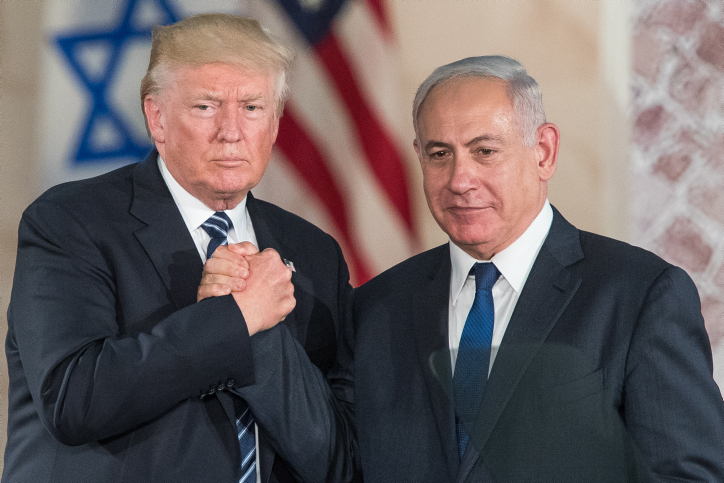
Trump’s “Board of Peace” Moves Forward as Netanyahu Tries to Draw Red Lines for the World


President Donald Trump has launched a far-reaching global initiative known as the Board of Peace, inviting leaders from roughly 60 countries to participate in a new international body aimed at conflict resolution and post-war reconstruction, with an early and urgent focus on the Gaza Strip.

The initiative, according to administration officials, is designed to unite participating nations under a shared charter emphasizing peace-building, stable governance, and long-term recovery in regions devastated by war. In direct letters to world leaders, Trump described the effort as a “bold new approach to resolving global conflict,” arguing that decades of entrenched diplomacy have failed to produce lasting results.

Invitations were extended to a wide range of countries across multiple regions, including Jordan, Greece, Cyprus, Pakistan, Canada, Egypt, Turkey, and others. Several governments have confirmed receiving invitations, with some agreeing to participate and others still evaluating the proposal.

But while much of the world debates how — or whether — to engage, Israeli Prime Minister Benjamin Netanyahu has taken a more aggressive posture: attempting to dictate who is and is not acceptable to the international community.

Netanyahu’s Objections: Security or Political Control?

Netanyahu has sharply criticized the initiative over the reported involvement of Turkey and Qatar in advisory structures tied to Gaza’s post-war governance. His government has claimed that neither country should have any role in reconstruction or stabilization, asserting that their presence would undermine Israeli security interests.

Yet critics argue Netanyahu’s response reflects something deeper than security concerns — a long-standing effort to maintain unilateral control over Gaza’s future while rejecting any international framework he does not fully dominate.

Netanyahu’s office publicly complained that the initiative was not coordinated with Israel, as if Gaza’s future were Israel’s alone to decide. That assertion has drawn criticism from diplomats and analysts who note that Gaza is not Israeli sovereign territory and that its humanitarian collapse has global implications.

Selective Outrage and Political Convenience

Israeli officials routinely accuse Turkey and Qatar of political or financial ties to Hamas, yet those same critics point out that Qatar has for years served as a key intermediary in ceasefire negotiations — often with Israel’s tacit approval — and that Turkey remains a major regional power whose exclusion could cripple any realistic reconstruction effort.

Netanyahu’s categorical rejection of their involvement has been described by observers as political theater designed to satisfy hardline domestic audiences rather than a serious attempt to resolve Gaza’s future.

In public statements, Netanyahu went so far as to declare that no Turkish or Qatari presence of any kind would be tolerated in Gaza, despite the fact that the Board of Peace does not call for troop deployments by either country. The comments were widely interpreted as an attempt to preemptively sabotage an international initiative that could dilute Israel’s unilateral leverage.

A Pattern of Resistance to International Oversight

This is not the first time Netanyahu has resisted multinational involvement in Gaza. For years, his governments have rejected proposals involving international trusteeships, peacekeeping forces, or shared governance mechanisms — even as Israeli officials acknowledge that Hamas cannot simply be “bombed out of existence.”

Critics argue that Netanyahu’s strategy has been internally contradictory: opposing Hamas rhetorically while simultaneously blocking diplomatic and governance alternatives that could actually replace it.

By attacking Trump’s initiative and attempting to blacklist entire countries, Netanyahu risks isolating Israel diplomatically at a moment when global patience is wearing thin over the ongoing humanitarian crisis in Gaza.

A Growing Diplomatic Fault Line

While President Trump pushes forward with the Board of Peace, Netanyahu’s resistance is emerging as a central obstacle — not because of unanswered security questions, but because of his insistence on veto power over any international solution he does not fully control.

As more nations weigh participation, the question may no longer be whether the world can agree on how to rebuild Gaza — but whether it is willing to allow Netanyahu to indefinitely block every pathway that does not preserve the status quo.

In that sense, the strongest opposition to Trump’s peace initiative may not come from global rivals or diplomatic skeptics, but from an ally determined to keep Gaza locked in permanent limbo.


Trump’s Approval Rating, the 29% Youth Collapse, and What It Means for the 2026 Midterms

As the United States heads toward the 2026 midterm elections, President Donald Trump is facing a familiar but increasingly dangerous political reality: while his base remains loyal, large parts of the electorate have turned sharply against him — especially younger voters.

Trump’s approval rating is not uniformly 29 percent nationwide, but that number does matter — because it captures a collapse among a generation that will help decide close races.

Where Trump’s Approval Actually Stands

Across the general U.S. adult population, Trump’s approval rating currently sits in the low-40 percent range, with disapproval exceeding approval by a clear margin. That puts him “underwater,” a position that has historically spelled trouble for presidents entering midterm cycles.

However, among young voters ages 18–29, Trump’s approval has dropped to around 29 percent in several recent polls. That is not a statistical footnote — it’s a flashing warning light.

Why the 29% Youth Number Is So Damaging

Midterms are not just about turnout totals — they’re about energy, margins, and momentum.

Young voters are:

  • More concentrated in swing districts

  • Heavily represented in college towns and suburbs

  • Disproportionately influential in close House races

A 29 percent approval rating among young adults means Trump is not merely unpopular — he is politically toxic to an entire generation of voters. Even if some don’t turn out, those who do are overwhelmingly motivated to vote against him and candidates aligned with him.

Independents and Young Voters Are Converging

Trump’s problem isn’t Republicans. It’s independents and under-40 voters, two groups that often decide midterms.

Independents increasingly view Trump as:

  • Exhausting rather than effective

  • Chaotic rather than stabilizing

  • Focused on grievance rather than governance

Younger voters, meanwhile, are reacting to:

  • Economic pressure and housing unaffordability

  • Foreign policy fatigue and humanitarian concerns

  • Cultural backlash and political absolutism

Together, these blocs form the backbone of competitive districts — and right now, they’re breaking hard against Trump.

Midterms as a Referendum on Trump, Not Congress

When a president’s approval is low, midterms become a referendum on the White House — not on individual lawmakers.

With Trump hovering in the low-40s overall and collapsing to 29 percent among younger voters, Democrats are likely to nationalize races and force Republican candidates to answer one central question:

Do you stand with Trump — or not?

That’s a tough spot for GOP candidates in suburban and swing districts, where even a small youth turnout surge or independent shift can flip seats.

Trump: Turnout Machine or Anchor?

Trump remains a powerful motivator for his base, and in safe districts, that’s an asset.

But in competitive districts, he’s increasingly an anchor.

Candidates tied closely to Trump may survive primaries only to struggle badly in general elections. The deeper his unpopularity runs with younger and independent voters, the harder it becomes for Republicans to localize races or distance themselves from national politics.

What Could Still Change

Approval ratings can move — but only if conditions change meaningfully.

That would require:

  • Sustained economic improvement felt by younger voters

  • De-escalation of major foreign conflicts

  • A shift in tone away from constant confrontation

Absent that, the numbers suggest a hostile environment for Republicans.

The Bottom Line

Trump is not sitting at 29 percent overall — but the fact that he is at roughly 29 percent among young voters may be just as consequential.

Combined with overall approval in the low-40s, that generational rejection points toward a difficult 2026 midterm landscape for Republicans. History is clear: presidents who are underwater — and deeply unpopular with emerging voters — rarely escape midterms without losses.

If these trends hold, voters are likely to do what they often do in moments like this: rebalance power, not reinforce it.

And that could reshape Congress in November.

Ana Kasparian Says She’s Being Targeted After Criticizing Netanyahu — A Free Speech Flashpoint


Media commentator Ana Kasparian says she’s facing coordinated attempts to silence her after sharply criticizing Israeli Prime Minister Benjamin Netanyahu and Israel’s conduct in the Gaza war—igniting a fierce debate over free speech, political pressure, and where criticism of a foreign government crosses into taboo.

Kasparian, a longtime progressive voice and co-host of The Young Turks, has accused pro-Israel advocacy networks and political operatives of waging a campaign to discredit her, label her speech as hateful, and pressure platforms and sponsors to distance themselves from her work. She argues the backlash isn’t about factual errors or incitement—but about punishing dissent.

From Policy Critique to Personal Blowback

The controversy escalated after Kasparian delivered a series of commentaries condemning Netanyahu’s leadership and the humanitarian consequences of Israel’s military campaign in Gaza. In her telling, the response was swift: online pile-ons, accusations conflating criticism of Israeli policy with antisemitism, and efforts to brand her commentary as unacceptable—even when grounded in reporting from international human rights organizations.

Kasparian has been explicit about the line she says she will not cross—and the one she insists others shouldn’t blur. Criticizing a government and its leaders, she argues, is not an attack on a people or a faith. “Political speech about state power must remain protected,” she has said, warning that suppressing such criticism sets a dangerous precedent.

Free Speech—or Selective Speech?

Supporters frame Kasparian’s stance as a textbook free-speech issue: a U.S. journalist criticizing a foreign head of government and facing intimidation for it. They point to a broader trend in which outspoken critics of Israel’s current government are subjected to reputational attacks or professional consequences—often without a substantive rebuttal to their claims.

Critics counter that rhetoric around Israel can quickly fuel antisemitism and that public figures bear responsibility for how their words are received. But Kasparian’s defenders say that argument becomes a silencing tool when it’s deployed to shut down policy debate rather than address genuine bigotry.

Why Netanyahu Is Central to the Fight

Netanyahu’s long tenure, hardline coalition partners, and ongoing corruption cases have made him a lightning rod well beyond Israel’s borders. For critics like Kasparian, calling out his leadership is not only legitimate—it’s necessary. The attempt to equate that criticism with hate speech, they argue, shields a powerful leader from accountability at a moment when scrutiny is most warranted.

A Broader Chilling Effect

The fallout has widened the conversation beyond one commentator. Journalists, academics, and activists say the episode illustrates a chilling effect on discourse about Israel and Palestine in the U.S., where fear of backlash can deter even careful, evidence-based criticism. If the penalty for dissent is professional exile, they warn, public debate narrows—and democracy suffers.

For Kasparian, the issue is simple: political speech must remain free, especially when it challenges powerful actors. “If criticizing a prime minister becomes grounds for silencing,” she has said, “then free speech isn’t free—it’s conditional.”

Whether one agrees with her views or not, the fight she’s waging has become a test case for how far free expression extends when geopolitics, identity, and power collide—and who gets to decide where the line is drawn.


Elderly Hmong U.S. Citizen Dragged From St. Paul Home in Freezing ICE Raid


ST. PAUL, Minn. — A widely circulated video showing an elderly Hmong man being pulled from his home in brutal winter conditions has ignited outrage across Minnesota after it was confirmed that the man is a U.S. citizen who was mistakenly detained by federal agents.

The man, identified as ChongLy “Scott” Thao, is a naturalized American citizen who has held U.S. citizenship for many years. Despite this, federal agents forcibly removed him from his St. Paul home during a winter operation conducted in roughly 10-degree weather, according to family members and local reporting.

A Citizen, Not an Immigration Suspect

This was not the arrest of an undocumented immigrant.

Thao was detained after agents conducting a broader immigration enforcement operation allegedly believed he matched the description of another individual. After being taken from his home, fingerprinted, and questioned, agents ultimately confirmed that he was, in fact, a U.S. citizen. He was then returned home without charges.

No immigration violation was ever established.

What Family Members Say Happened

Relatives describe a raid that quickly escalated into chaos. They say agents forced entry by breaking down the front door, trashed the residence, and handcuffed Thao in front of his young grandson, who was visibly terrified.

Despite the extreme cold, family members say agents refused to allow the elderly man to put on warm clothing before escorting him outside. Video footage shows him being taken into the freezing night partially dressed, wrapped only in minimal coverings.

One relative alleges that during the raid, an agent pointed a gun at the head of Thao’s daughter-in-law, intensifying the fear inside the home as the operation unfolded.

Released — With No Apology

After confirming his citizenship, agents quietly returned Thao to his home.

There was no apology.
No explanation.
No immediate help repairing the destroyed front door.

What remained was a damaged home, a shaken family, and video evidence of an elderly American forced to endure dangerous cold for no legitimate reason.

“This Is the System”

For many Hmong residents in Minnesota, the incident is not being dismissed as a simple mistake.

Community members say it reflects a broader pattern of federal enforcement tactics that rely on overwhelming force, even when targeting people who are lawfully present — or, in this case, fully protected under U.S. law.

“This isn’t a glitch in the system,” one advocate said. “This is the system.”

Critics argue the incident sends a chilling message: citizenship, age, and even life-threatening temperatures offer no protection when authorities decide to act first and verify later.

Calls for Accountability

Civil rights advocates and community leaders are now demanding answers, including:

  • Why was such force used before confirming identity?

  • Why was an elderly man exposed to dangerous cold?

  • What safeguards exist to prevent U.S. citizens from being subjected to similar raids?

  • Who is accountable when a mistake causes lasting trauma?

As winter continues in Minnesota, the family says the emotional damage may last far longer than the cold that night — a reminder that rights mean little if they are only recognized after harm is done.

Constitutional and Legal Implications

Beyond the human trauma, the raid raises serious constitutional red flags that legal experts say cannot be brushed aside as a simple mistake.

Fourth Amendment — Unreasonable Search and Seizure
The Fourth Amendment protects people in the United States from unreasonable searches and seizures, especially inside their homes. Forced entry, handcuffing, and detention are considered extreme intrusions under constitutional law and generally require probable cause and a valid warrant. When the target turns out to be a U.S. citizen with no criminal record, questions arise about whether agents acted on sufficient evidence before breaking down the door.

Courts have repeatedly held that mistaken identity does not automatically excuse unconstitutional conduct, particularly when officers have time and tools to verify identity before escalating force.

Fifth Amendment — Due Process
The Fifth Amendment guarantees that no person shall be deprived of liberty without due process of law. Detaining a citizen, exposing him to potentially life-threatening cold, and returning him home without explanation or remedy raises concerns that due process was treated as an afterthought rather than a prerequisite.

Legal scholars note that due process is not satisfied simply because someone is eventually released. The harm occurs at the moment liberty is taken, not when the error is corrected.

Excessive Force and Conditions of Detention
Forcing an elderly man to stand partially dressed in freezing temperatures may also implicate standards governing excessive force and humane treatment. Federal courts have recognized that exposing detainees to extreme cold can constitute cruel or reckless conduct, particularly when no immediate safety threat exists.

Age, physical vulnerability, and weather conditions are all factors courts consider when determining whether force was reasonable.

Citizenship Does Not Suspend Rights
Perhaps most troubling, civil rights advocates argue the incident underscores a dangerous reality: citizenship alone does not shield individuals from aggressive immigration enforcement tactics. While immigration authorities have broad powers, those powers are not unlimited when applied to citizens inside their homes.

The Constitution does not allow the government to “act first and verify later” when fundamental rights are at stake.

Potential Legal Exposure
Legal experts say incidents like this can expose the government to:

  • Civil rights lawsuits under federal law

  • Claims for unlawful detention and excessive force

  • Challenges to enforcement policies that rely on racial or ethnic profiling

  • Judicial scrutiny of warrant and identity-verification procedures

Whether accountability follows often depends on whether courts are willing to treat these cases as systemic failures rather than isolated errors.

A Chilling Precedent

At its core, the case raises a stark constitutional question: If an elderly U.S. citizen can be dragged from his home in freezing weather based on a mistake, what protections are truly guaranteed to anyone?

The Constitution does not promise perfect government. But it does demand restraint, verification, and accountability — especially when the state’s power crashes through a front door in the middle of winter.

For this family, and for many watching, the fear is not just what happened — but how easily it happened, and how quietly it ended, with no apology and no assurance it won’t happen again.