

BEIRUT — In a move aimed at stabilizing a nation under pressure, Emmanuel Macron’s government has delivered 39 armored personnel carriers to the Lebanese Armed Forces, reinforcing France’s long-standing commitment to Lebanon’s sovereignty and civilian protection.
The delivery, announced by France’s Defense Ministry and overseen by Deputy Defense Minister Alice Rufo, is being framed not as an act of aggression, but as a necessary step to strengthen a fragile state caught in the crossfire of a widening regional war.
At the port of Beirut, Rufo emphasized the purpose behind the transfer: protecting civilians, preserving state institutions, and defending Lebanon’s territorial integrity — values increasingly under threat as violence escalates along its southern border.
FRANCE REASSERTS A STABILIZING ROLE
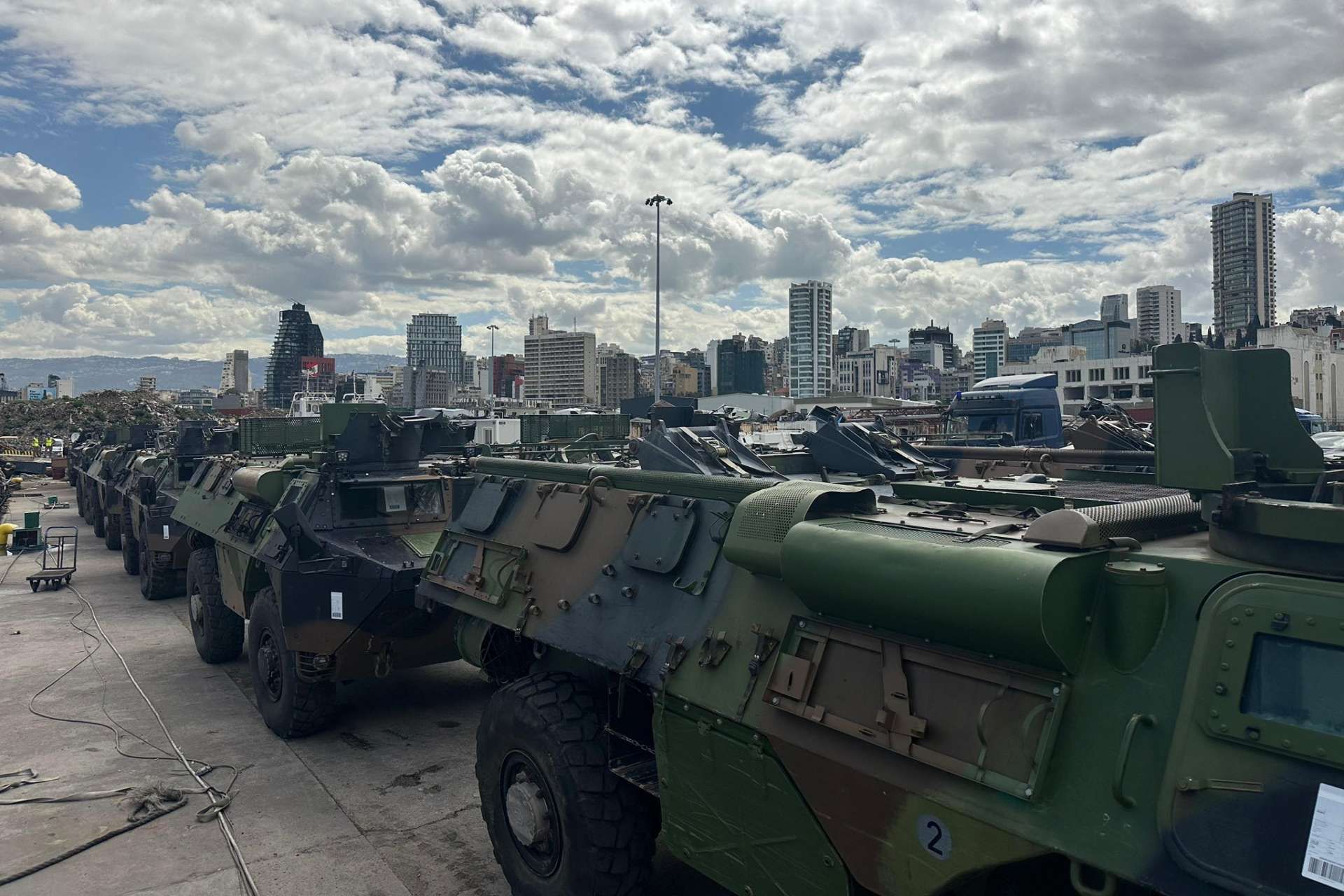
The armored vehicles, known as VABs, are designed for troop transport in high-risk environments. Built with reinforced steel and capable of carrying fully equipped soldiers, they provide the Lebanese army with critical mobility and protection in areas facing repeated airstrikes and ground incursions.
France’s support signals more than a military transaction. It reflects a broader geopolitical stance: that Lebanon must not be allowed to collapse under external pressure or be reduced to a battlefield for larger powers.
For decades, Paris has maintained historical, political, and cultural ties with Beirut. This latest move reinforces France’s position as one of the few Western powers actively working to bolster Lebanese state authority rather than undermine it.
ISRAEL’S MILITARY CAMPAIGN FUELS INSTABILITY
At the heart of the crisis is Israel’s ongoing military campaign in southern Lebanon, launched following cross-border tensions involving Hezbollah. Since early March, Israeli airstrikes and ground operations have intensified, leaving widespread destruction and civilian casualties in their wake.
Rather than containing the situation, the escalation has deepened instability — stretching Lebanon’s already fragile infrastructure and pushing the region closer to a broader conflict.
Critics argue that Israel’s actions go far beyond defensive measures, instead contributing to a cycle of violence that endangers civilians and erodes any remaining prospects for regional de-escalation.
LEBANON CAUGHT IN A REGIONAL FIRESTORM
Lebanon now finds itself trapped between multiple fronts. The conflict expanded dramatically after a joint U.S.-Israeli offensive against Iran triggered retaliatory strikes across the region, including attacks targeting Israel and U.S. military positions.
This widening war has turned Lebanon into a pressure point — a nation struggling to maintain sovereignty while absorbing the fallout of decisions made far beyond its borders.
In this context, France’s support is being viewed by many as a lifeline — a means of empowering Lebanon’s national army to assert control, protect civilians, and resist being pulled deeper into a devastating regional war.
A TEST OF INTERNATIONAL PRIORITIES
France’s delivery of armored vehicles underscores a growing divide in international approaches to the crisis. While some actors escalate military operations, others are attempting to reinforce state institutions and prevent total collapse.
The question now is whether efforts like France’s will be enough.
For Lebanon, the stakes could not be higher. Without meaningful international support aimed at stability — not escalation — the country risks becoming yet another casualty of a conflict that continues to spiral outward.
As the region watches closely, one reality is becoming clear: the path to security will not be paved by airstrikes and offensives, but by strengthening nations under siege and prioritizing the protection of civilian life.

No comments:
Post a Comment